

Brinsbury College students among first in country to see new state-of-the-art tech in action
Students of Brinsbury College will be among the first in the country to see new wireless sensors in use to enhance teaching and learning across horticulture and agriculture.
As part of the national 5G Innovation in the Regions project, the college has been installing a range of environmental sensors.
The wireless sensors are linked through advanced connectivity to the estate’s new private, 5G network.
They measure TSR (total solar radiation), PAR (photosynthetically active radiation), soil water potential, temperature, relative humidity, leaf temperature, and leaf wetness.
The data is transmitted and seen in real time through an interactive dashboard, allowing staff and students to monitor, understand and respond to changes in the growing environment.
Paul Burry, Head of Learning, said this live visualisation will support demonstrations on how blinds, vents and irrigation can be adjusted to influence temperature, humidity, and light levels, key principles in understanding plant physiology and sustainable crop production.
Matt Craig from Agrimatters, who is supporting Brinsbury with the 5G project and installing the sensors, said: “The soil water potential data will be particularly useful in demonstrating to students the water holding capacity of different growing media and how watering and irrigation regimes must be tailored to provide effective watering
“A lack of understanding in this area among new staff entering the ‘growing’ sector was a recurring concern raised by commercial growers during our 2023/24 Brinsbury-commissioned research.
“The study aimed to identify the key skills employers prioritise in new entrants to the industry, highlighting this knowledge gap as a significant barrier to workforce readiness.”
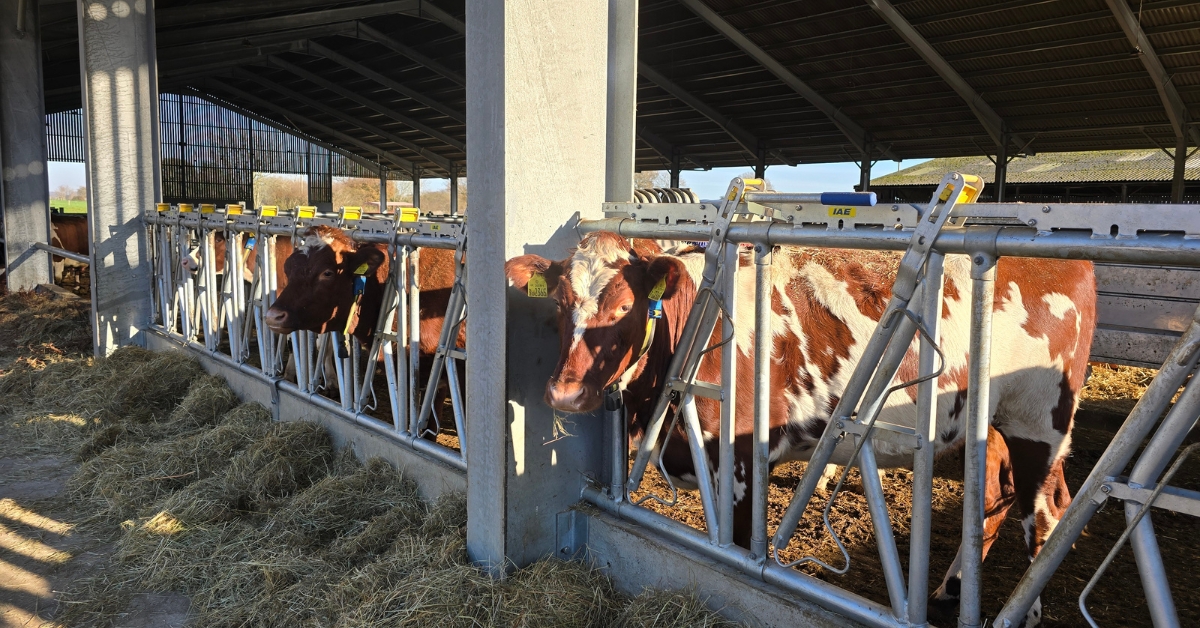
Agricultural students and facilities will also benefit. Sensors and equipment deployed across the college farm as part of the agriculture ‘use-cases’, will also demonstrate how advanced connectivity can benefit farming efficiency, animal welfare and, ultimately, farm profitability.
At Stable Barn Farm, there will be an extension of the ‘Herdvision’ system already employed in the milking parlour for monitoring body condition scoring and lameness, adapted as part of the project to remotely monitor the growth rates and body condition score of dairy heifer replacements.
Thanks to the private 5G network across the estate, the scanning equipment can be deployed in both the covered livestock yards, as well as at pasture allowing the animals to be tracked right through the production cycle from calves to the point of calving.
This offers significant benefits for management in terms of monitoring growth rates without the need to physically muster cattle and put them through a handling facility and weigh crate.
Ben Penford, Brinsbury College Farm Manager, said: “We are very excited to be showcasing this novel technology that has real potential to offer productivity gains, not just for our farm but for UK agriculture PLC, once proof of concept is successfully demonstrated through the project.
“I’m really pleased that Brinsbury students will be among some of the first agricultural students in the country to see this technology in action, which gives them a head start when it comes to encountering or even introducing this technology on farms when they reach the work place”.
For more information about our horticultural and agricultural courses click here